Thai Tom Kha Gai Recipe

You’ve probably scrolled past dozens of Tom Kha Gai recipes, wondering if you’ll actually nail that perfect balance of creamy coconut and zesty lime. Here’s the thing—this isn’t just another soup recipe that’ll leave you scratching your head at the grocery store, staring at galangal like it’s an alien artifact. I’m going to walk you through every single step, from finding those tricky ingredients to achieving that restaurant-quality flavor that’ll make your kitchen smell absolutely incredible.
Overview
- Simmer chicken broth with galangal, lemongrass, and kaffir lime leaves for 10 minutes to create aromatic base.
- Add bite-sized chicken pieces and cook for 5 minutes until almost done in the fragrant broth.
- Slowly incorporate coconut milk while stirring gently at low heat to prevent curdling and separation.
- Balance flavors with fish sauce, lime juice, and palm sugar for sweet, salty, and sour harmony.
- Garnish with fresh cilantro and green onions, then serve immediately while hot with jasmine rice.
Recipe
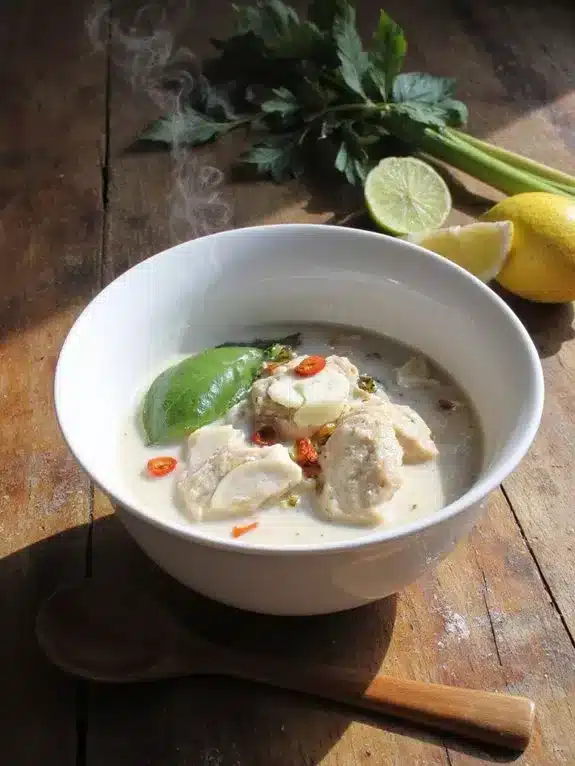
There’s something magical about the first spoonful of tom kha gai that hits your taste buds like a warm, creamy hug from Southeast Asia. This isn’t your average chicken soup, folks – we’re talking about a coconut-based masterpiece that somehow manages to be simultaneously rich and invigorating, like drinking liquid silk that’s been infused with the essence of a Thai herb garden. The beauty of this soup lies in its perfect balance, where each ingredient plays nicely with the others instead of fighting for attention like siblings in the backseat of a car.
What I love most about tom kha gai is how it manages to be both exotic and comforting at the same time. You’ve got tender chicken swimming in creamy coconut milk, but then these aromatic herbs come swooping in with their complex flavors that make your kitchen smell like you’ve been transported to a Bangkok street market. The galangal gives it this earthy, almost pine-like kick that’s completely different from regular ginger, while the lemongrass adds this bright, citrusy note that keeps everything from getting too heavy. It’s like the soup equivalent of that friend who’s sophisticated but also knows how to have fun.
Start by getting your chicken broth nice and bubbly in a large pot, then toss in those aromatic heroes – the galangal, lemongrass, and torn kaffir lime leaves. Let them simmer together for about 10 minutes, which is just enough time to infuse the broth with all those complex flavors that make this soup special. Your kitchen should start smelling pretty amazing right about now, and if it doesn’t, you might want to check that your galangal is actually galangal and not some random root vegetable.
Once your broth is properly infused and fragrant, add the chicken pieces and let them cook for about 5 minutes until they’re almost done but still have a tiny bit of pink in the center. Now comes the pivotal part that separates the pros from the amateurs – pour in that coconut milk slowly and bring everything to a gentle simmer. The key word here is gentle, because if you let this thing boil like it owes you money, the coconut milk will curdle faster than you can say “kitchen disaster.”
Slide those sliced mushrooms into the pot along with the smashed chilies, and let everything cook together for another 3-4 minutes until the mushrooms are tender but not mushy. This is when the soup really starts coming together, with all those flavors melding into something that’s greater than the sum of its parts. The mushrooms add this nice earthy texture that pairs beautifully with the tender chicken.
Now for the flavor balancing act that makes or breaks this dish – add the fish sauce, lime juice, and palm sugar, but don’t just dump them in and call it a day. Taste as you go, adjusting the levels until you hit that perfect sweet, salty, and sour harmony that Thai cuisine is famous for. It should taste bright and complex, with no single flavor dominating the others like an overeager karaoke singer.
Remove the pot from heat and sprinkle in those fresh cilantro leaves and sliced green onions for a final pop of color and invigorating touch. Serve this beauty immediately while it’s still steaming hot, preferably with some jasmine rice on the side to soak up every last drop of that incredible broth.
- 1 lb boneless chicken thighs, cut into bite-sized pieces
- 2 cans (14 oz each) coconut milk
- 2 cups chicken broth
- 3-inch piece fresh galangal, sliced thin
- 2 stalks lemongrass, bruised and cut into 2-inch pieces
- 6 kaffir lime leaves, torn
- 8 oz mushrooms, sliced
- 3 Thai bird’s eye chilies, smashed
- 3 tablespoons fish sauce
- 2 tablespoons lime juice
- 1 tablespoon palm sugar or brown sugar
- 1/4 cup fresh cilantro leaves
- 2 green onions, sliced
- Salt to taste
Cooking Steps
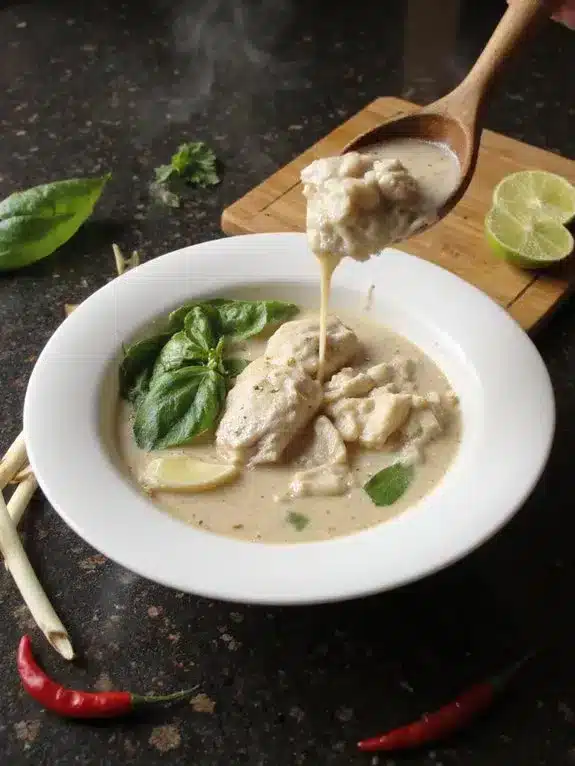
You’ll want to build this soup in layers, starting with that aromatic broth base that’ll make your kitchen smell like a Thai restaurant, then gently coaxing the chicken to tender perfection before introducing the coconut milk without making it curdle like yesterday’s coffee creamer.
The real magic happens when you balance those bold flavors—salty, sour, sweet—like you’re conducting a tiny orchestra in your pot, because let’s be honest, getting that balance right is what separates restaurant-quality tom kha gai from sad coconut chicken water.
Fresh herbs at the end aren’t just pretty garnish, they’re your flavor finale that transforms this from good soup to “why am I not eating this every week” soup.
Step 1. Infuse Aromatic Broth Base
The foundation of exceptional tom kha gai starts with properly infusing your broth base, and honestly, this step separates the okay soups from the absolutely divine ones. You’ll want to embrace traditional techniques here, giving those flavorful aromatics time to work their magic.
Bring your chicken broth to a rolling boil, then add your galangal slices, bruised lemongrass pieces, and torn kaffir lime leaves. Here’s where patience pays off – let this aromatic trio simmer for a full ten minutes. I know it seems like forever when you’re hungry, but trust me on this. Those essential oils need time to release and meld together.
The broth should smell absolutely intoxicating by now, like you’ve transported your kitchen straight to Thailand.
Step 2. Cook Chicken Until Tender
Once your broth base smells like pure aromatic heaven, it’s time to add the star of the show – that beautiful chicken. Slip those tender pieces right into your simmering pot, where they’ll dance around with all those gorgeous aromatics.
Here’s where patience becomes your best friend – you’ll want to cook them for about five minutes until they’re almost done but still have that slight bounce when you poke them.
Now, I know what you’re thinking: “Should I add chicken seasoning?” Trust me, with all that fish sauce coming later, you’re already covered. The coconut milk we’ll add next will naturally thicken broth just enough to coat each piece perfectly. Keep that heat gentle, friends – we’re building something magical here.
Step 3. Add Coconut Milk Gently
Now here’s where things get a little nerve-wracking, and honestly, this step used to make me break out in a cold sweat. You’re about to add that beautiful, creaming coconut milk to your hot broth, and if you mess this up, you’ll end up with a chunky, separated disaster instead of silky soup perfection.
Pour the coconut milk in slowly while stirring gently. Don’t just dump it all in like you’re filling a bathtub. Think more like you’re introducing two shy people at a party – ease them into it. Keep that heat at a gentle simmer, not a rolling boil, because preventing curdling is all about temperature control. Hot coconut milk plus aggressive bubbling equals soup catastrophe, and nobody wants that mess.
Step 4. Season and Balance Flavors
This magical moment right here separates the amateur soup slingers from the flavor wizards, and trust me, you’re about to become the latter.
Start with three tablespoons of fish sauce, then add two tablespoons of lime juice and one tablespoon of palm sugar. But here’s where ingredient quality matters most, taste as you go because every fish sauce brand hits differently. Want more tang? Squeeze in extra lime. Need sweetness? Add sugar gradually. The goal is perfect harmony, sweet dancing with salty, sour balancing everything out.
Don’t forget presentation aesthetics either, those torn kaffir lime leaves floating on top aren’t just for show, they’re aromatic little flavor bombs that make your soup look restaurant-worthy.
Step 5. Garnish With Fresh Herbs
With your soup now perfectly balanced, you’re ready for the grand finale that’ll make your kitchen smell like a Thai street market. Fresh herb pairings transform your tom kha gai from good to absolutely divine.
Grab that handful of cilantro leaves – they’re not just decoration, they’re flavor bombs that brighten every spoonful. Those sliced green onions? They add a gentle bite that cuts through the rich coconut base beautifully.
Want to explore herb garnish variations? Try adding torn Thai basil for an anise-like sweetness, or thinly sliced mint leaves for extra freshness. Some folks love a sprinkle of chopped chives instead of green onions.
Don’t dump everything in at once – scatter those herbs gently across the surface, creating little pockets of aromatic goodness that’ll hit your nose before your taste buds.
Top Tips
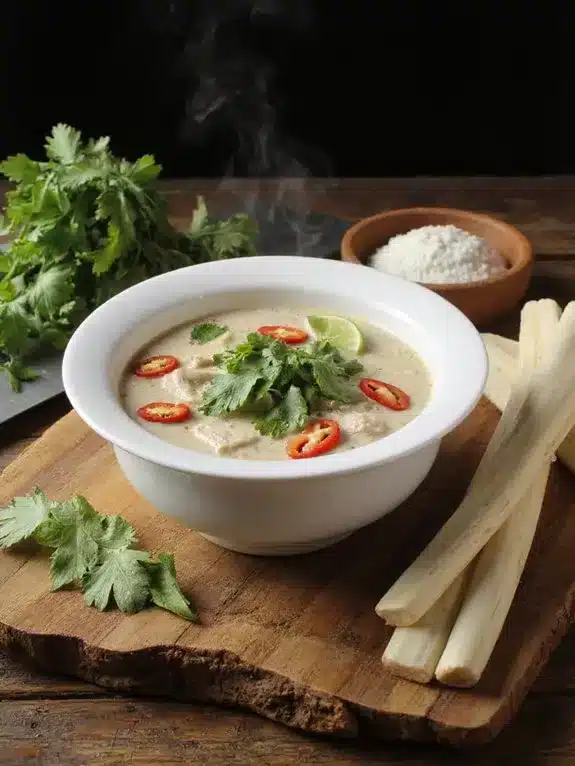
Although tom kha gai might seem straightforward, mastering this soup requires understanding a few indispensable techniques that’ll transform your kitchen creation from good to absolutely divine. First, ingredient quality matters tremendously—fresh galangal beats dried every time, and full-fat coconut milk creates that luxurious texture we’re craving.
Don’t rush the aromatics; let those lemongrass and lime leaves really infuse their magic.
Temperature control is your secret weapon. Keep that simmer gentle once coconut milk joins the party. For serving suggestions, think beyond just rice—crusty bread works beautifully for soaking up every drop.
Taste constantly and adjust those sweet, salty, sour notes until they sing together. Trust me, your taste buds know when you’ve hit that perfect balance.
Nutritional Guide
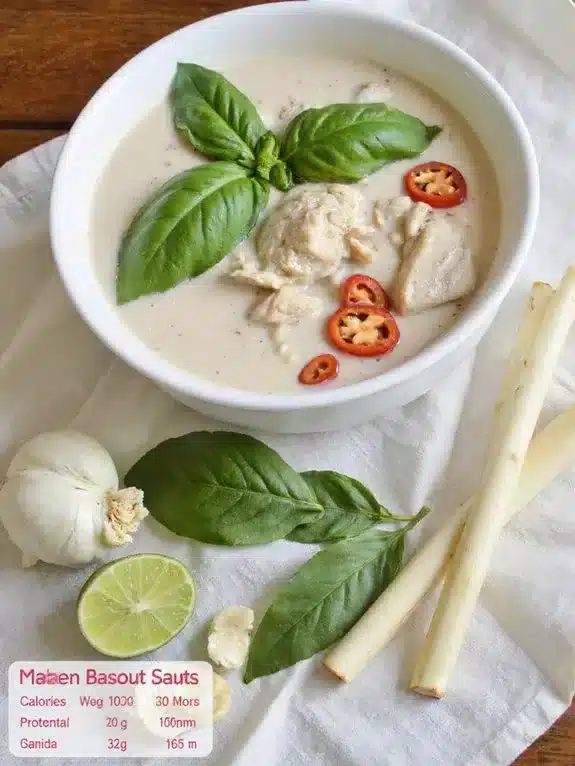
| Nutrient | Amount |
|---|---|
| Calories | 285 |
| Total Fat | 24g |
| Saturated Fat | 20g |
| Cholesterol | 65mg |
| Sodium | 890mg |
| Total Carbohydrates | 8g |
| Dietary Fiber | 2g |
| Sugars | 5g |
| Protein | 22g |
| Vitamin C | 15% DV |
| Iron | 8% DV |
| Calcium | 4% DV |
Tom kha gai provides a rich source of protein from the chicken while delivering beneficial fats from coconut milk. The soup is relatively low in carbohydrates, making it suitable for low-carb diets. The coconut milk contributes medium-chain triglycerides (MCTs), which may offer metabolic benefits. The fresh herbs and aromatics provide antioxidants and anti-inflammatory compounds, particularly from galangal and lemongrass. While the soup is high in saturated fat due to coconut milk, these are naturally occurring plant-based fats that differ from animal-derived saturated fats.
*Disclaimer: Nutritional values are estimates and may vary depending on specific brands of ingredients used, cooking methods, and portion sizes.*
Final Thoughts
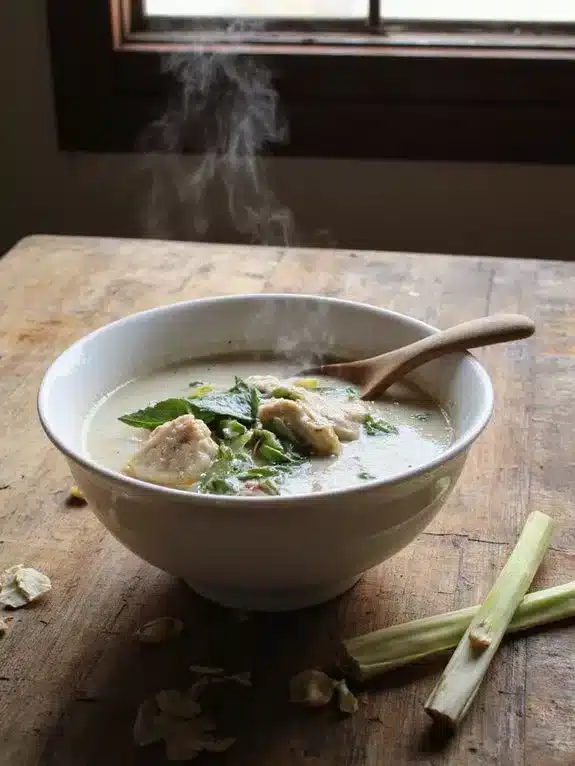
This soup truly represents everything I love about Thai cooking – it’s approachable enough for weeknight dinners yet complex enough to impress dinner guests who think you’ve somehow become a culinary wizard overnight. The ease of preparation makes it perfect when you’re craving something exotic but don’t want to spend hours in the kitchen wrestling with complicated techniques.
The versatility as a dish – you can make it heartier with extra chicken, lighter with more broth, or completely vegetarian by swapping mushroom stock and tofu. It’s like having a Thai restaurant in your back pocket, ready to transport you straight to Bangkok whenever Monday blues hit. Pure comfort in a bowl.
Frequently Asked Questions
Can I Substitute Chicken Thighs With Chicken Breast or Other Proteins?
You’re not restricted by traditional boundaries when exploring boneless chicken options – absolutely swap thighs for breast or try shrimp, tofu, or fish. These protein substitutions work beautifully, letting you customize while staying true to authentic flavors.
How Long Can Leftover Tom Kha Gai Be Stored in the Refrigerator?
You’ll want to store your leftover soup for up to three days in the refrigerator. Proper storage duration guarantees food safety, while ideal storage temperature below 40°F preserves that authentic flavor we all crave.
What’s the Difference Between Tom Kha Gai and Tom Yum Soup?
You’ll notice tom kha gai features a creamy coconut milk base with milder heat, while tom yum’s clear and intensely sour-spicy. Both share distinct herb flavors like lemongrass and lime leaves, but offer completely different taste experiences.
Can This Soup Be Made Vegetarian or Vegan Friendly?
You’ll love making this soup plant-based! Replace chicken with tofu or mushrooms for plant based protein options, swap fish sauce for soy sauce, and you’re set—coconut milk’s already among the best dairy free substitutes available.
Where Can I Buy Galangal and Kaffir Lime Leaves if Unavailable Locally?
Finding these treasures is like hunting culinary gems! You’ll discover galangal and kaffir lime leaves at international grocery markets, especially Asian stores, or through online specialty stores that ship authentic ingredients directly to your kitchen.
Printable Recipe Card
Want just the essential recipe details without scrolling through the article? Get our printable recipe card with just the ingredients and instructions.